

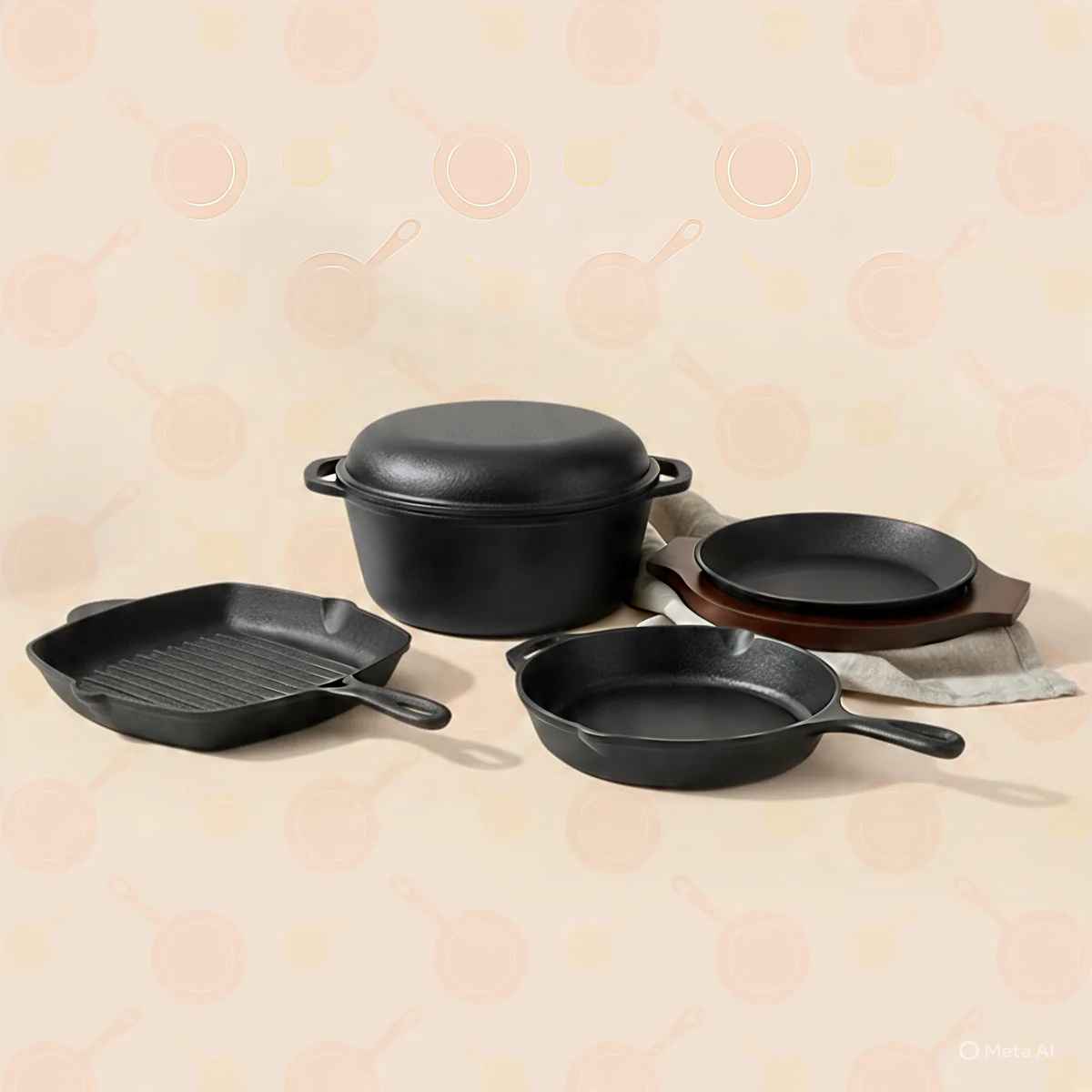
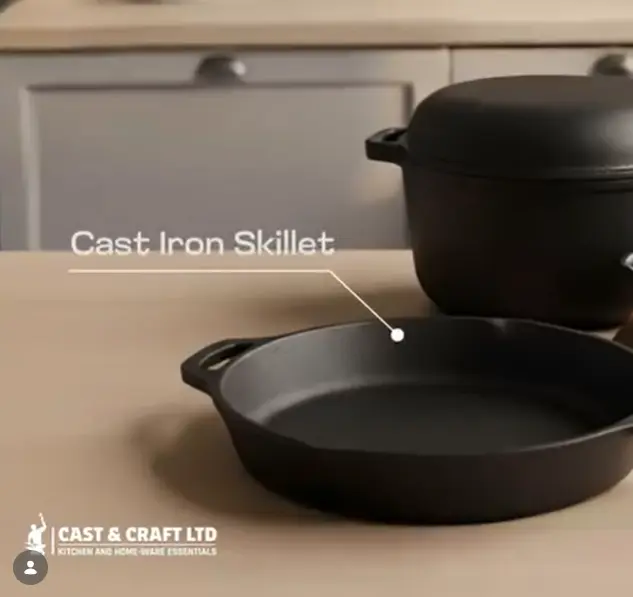
Cast iron cookware can last a lifetime — or longer — but only with the right cleaning and seasoning routine. This guide covers
‘ how to clean and season cast iron” everyday cleaning, deep cleaning, rust removal, and how to build a durable, natural non-stick seasoning layer, using methods that work reliably in a UK kitchen.
Why Cleaning and Seasoning Matter
Seasoning is a thin layer of polymerised oil baked onto the surface of cast iron that gives it natural non-stick properties and protects it from rust. Without regular cleaning and re-oiling, that layer breaks down and the pan becomes prone to sticking and rust. A well-maintained cast iron pan actually improves with age — most seasoned skillets in use today are decades old.
How to Clean Cast Iron After Everyday Use
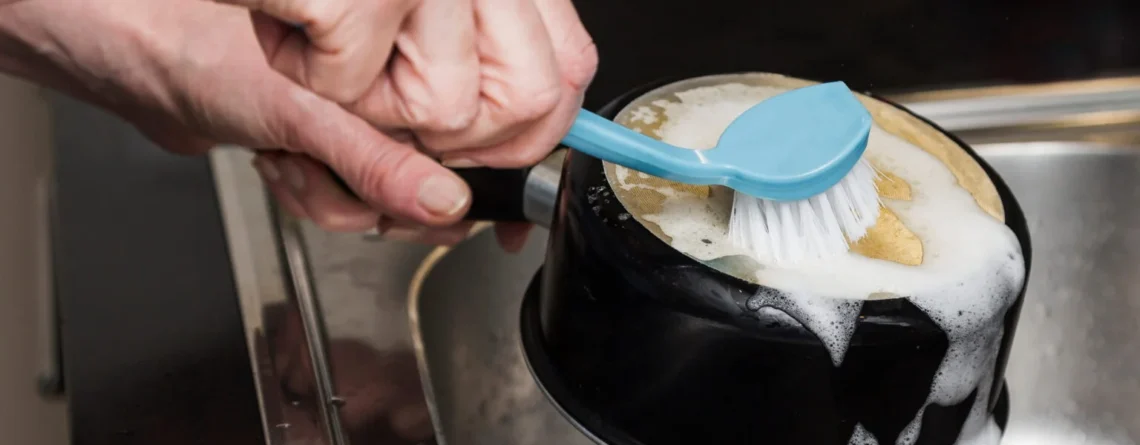
Cast iron rarely needs heavy washing — a quick rinse and dry is usually enough to protect the seasoning.
- Rinse with warm water while the pan is still slightly warm, using a soft sponge or brush to lift off food residue.
- Avoid soaking the pan or leaving it in a dishwasher — prolonged water contact strips seasoning and encourages rust.
- Dry immediately and thoroughly, ideally by placing the pan on a low hob heat for a minute to evaporate any remaining moisture.
- Apply a very thin layer of oil across the cooking surface before storing.
Removing Strong Odours (Fish, Garlic, Beef)
Sprinkle coarse salt into the warm pan and scrub gently with a cloth or brush — the salt acts as a mild abrasive without damaging the seasoning. Rinse, dry fully, then re-oil.
Deep Cleaning (Burnt-On Residue or Heavy Buildup)
For stubborn buildup, scrub with fine steel wool and a little mild soap. Note that this will remove some or all of the existing seasoning layer, so the pan should be re-seasoned afterwards (see below). Cooking a few shallow-fried meals in the pan can also help rebuild a working surface quickly between full seasoning sessions.
How to Remove Rust from Cast Iron
Rust forms when cast iron is left wet or stored in a damp environment — it doesn’t mean the pan is ruined.
- Scrub the rusted area with fine or medium steel wool until bare metal shows through.
- Wash the whole pan with warm water and a small amount of mild soap to remove any residue.
- Dry the pan completely, then place it on a low hob heat for a couple of minutes to drive off any last moisture.
- Re-season the pan following the full seasoning process below, as removing rust also removes seasoning in that area.
Prevention: always dry cast iron fully and store it with a light coat of oil, ideally somewhere dry rather than in a damp cupboard or near a sink.
How to Season Cast Iron (Step-by-Step)
Seasoning creates the protective, non-stick surface that defines good cast iron cookware.
1. Clean the Cookware
Wash with warm water and a little mild soap, using a sponge or brush to remove any residue or light rust. Rinse and dry completely with a clean towel.
2. Preheat the Oven
Preheat the oven to 180–200°C (350–400°F). Position a rack in the middle of the oven with space for the pan.
3. Apply a Thin, Even Layer of Oil
Using a paper towel, coat the entire pan — inside, outside, and handle — with a thin layer of oil. Wipe off any excess; pooled oil creates a sticky, uneven finish rather than a hard, smooth one.
Best oils for seasoning cast iron:
- Rapeseed (canola) oil — widely available, high smoke point
- Sunflower oil — good all-round choice
- Flaxseed oil — favoured for a very hard finish, though it can flake if applied too thickly
- Vegetable shortening — traditional option, good coverage
4. Bake the Pan Upside Down
Place the pan upside down on the middle rack, with foil on the rack below to catch any drips. Bake for 1–2 hours, allowing the oil to polymerise into a hard, bonded coating.
5. Cool and Repeat if Needed
Let the pan cool fully inside the oven before handling. For a stronger surface, repeat the oiling-and-baking cycle two to three times, particularly on a new or freshly stripped pan.
6. Maintain the Seasoning Long-Term
- Clean with hot water after each use rather than soap where possible.
- Dry fully every time — this is the single most important habit for cast iron longevity.
- Apply a thin oil layer before storing.
- Cooking fatty or oily foods regularly naturally reinforces the seasoning over time.
Raw Cast Iron vs. Enamelled Cast Iron: Key Difference
Not all cast iron is cared for the same way. Raw (bare) cast iron — most skillets, griddles, and woks — needs the oil-seasoning process above and should avoid prolonged soap use. Enamelled cast iron — most Dutch ovens and casseroles with a glazed coating — does not need seasoning, can be washed with dish soap and warm water, and should never be scrubbed with steel wool, which will damage the enamel. Always check which type you own before applying steel wool or oil-seasoning steps.
Also check our collection: Cast Iron Cookware collection Dutch Oven
Frequently Asked Questions
How often should I season my cast iron pan?
Well-used pans build seasoning naturally through cooking. A full re-seasoning is usually only needed a few times a year, or whenever the surface looks dull, patchy, or food starts sticking.
Can I use soap on cast iron?
A small amount of mild soap is fine occasionally and won’t ruin a well-seasoned pan. Frequent heavy soap use over time can gradually wear down the seasoning layer, so hot water and a brush is the better everyday default.
What’s the best oil for seasoning cast iron?
Rapeseed (canola), sunflower, and flaxseed oils are all effective. Flaxseed gives the hardest finish but requires very thin coats to avoid flaking; rapeseed and sunflower are more forgiving for beginners.
Why is my cast iron sticky after seasoning?
This almost always means too much oil was applied before baking. Wipe off excess oil until the surface looks almost dry before it goes in the oven — a thin layer bonds properly, a thick layer stays tacky.
How do I remove rust from cast iron?
Scrub the rusted area with steel wool down to bare metal, wash and dry the pan thoroughly, then re-season it using the full oven method above.
Is enamelled cast iron cared for the same way as raw cast iron?
No. Enamelled cast iron doesn’t need seasoning and can be washed with soap and water, but should never be cleaned with steel wool, which damages the enamel coating.

Comment (1)
[…] and use, developing a smoother, more effective natural non-stick surface over time. See our full guide to cleaning and seasoning cast iron for the […]