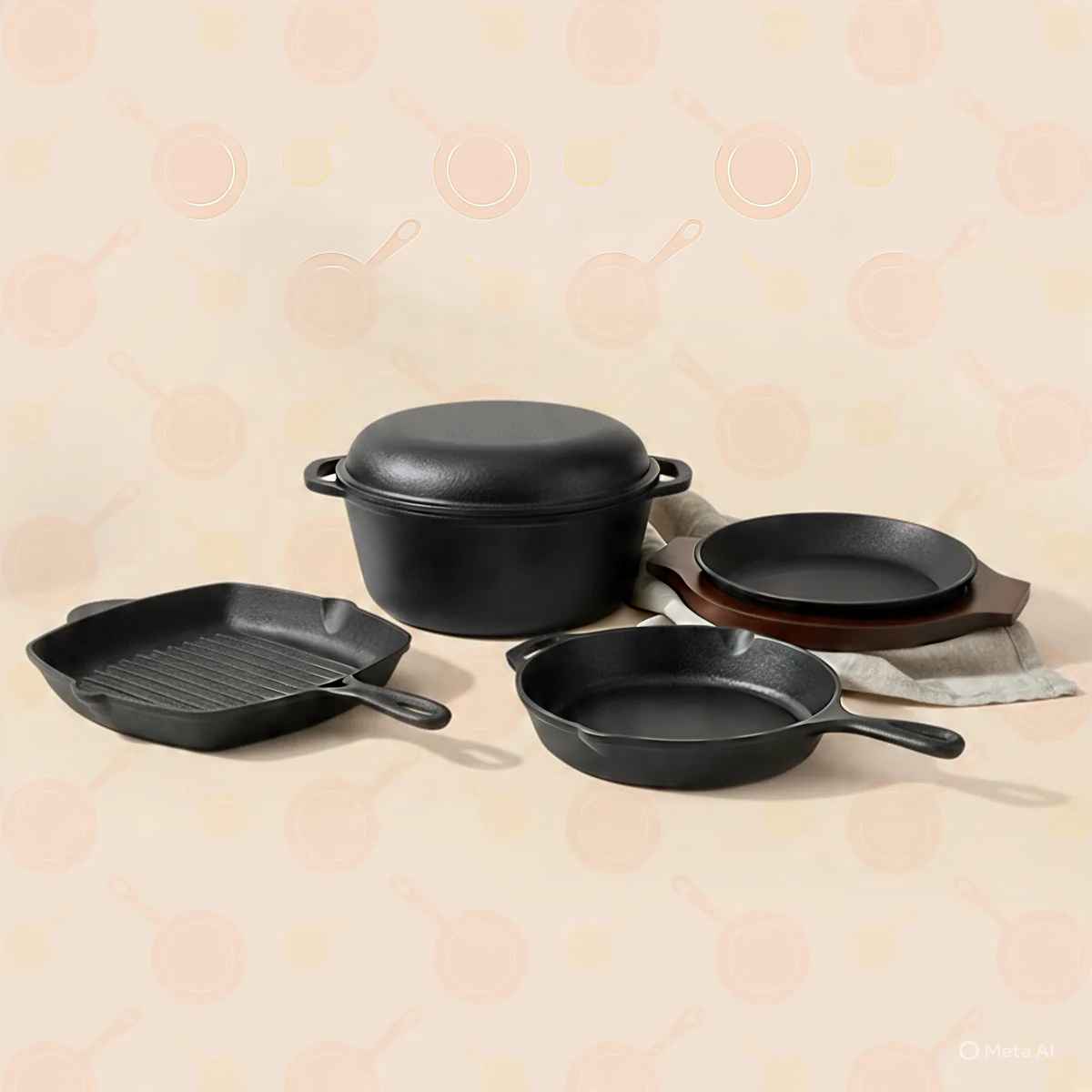
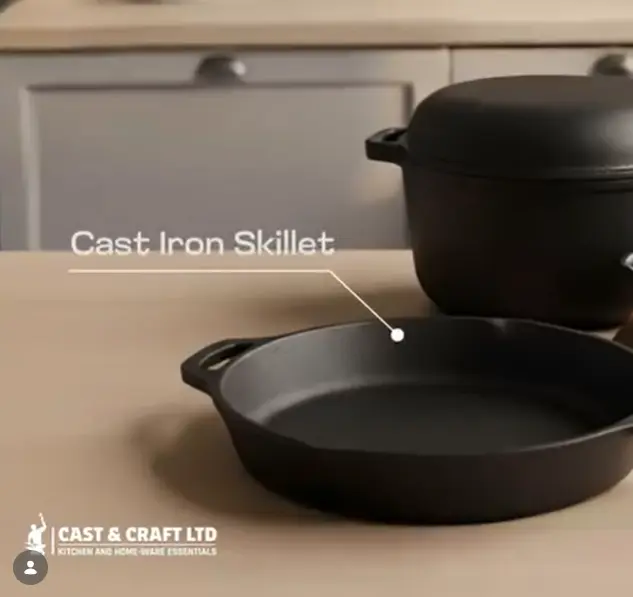
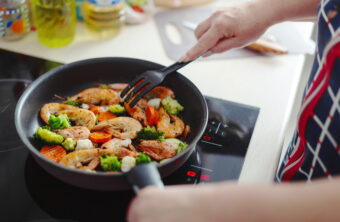
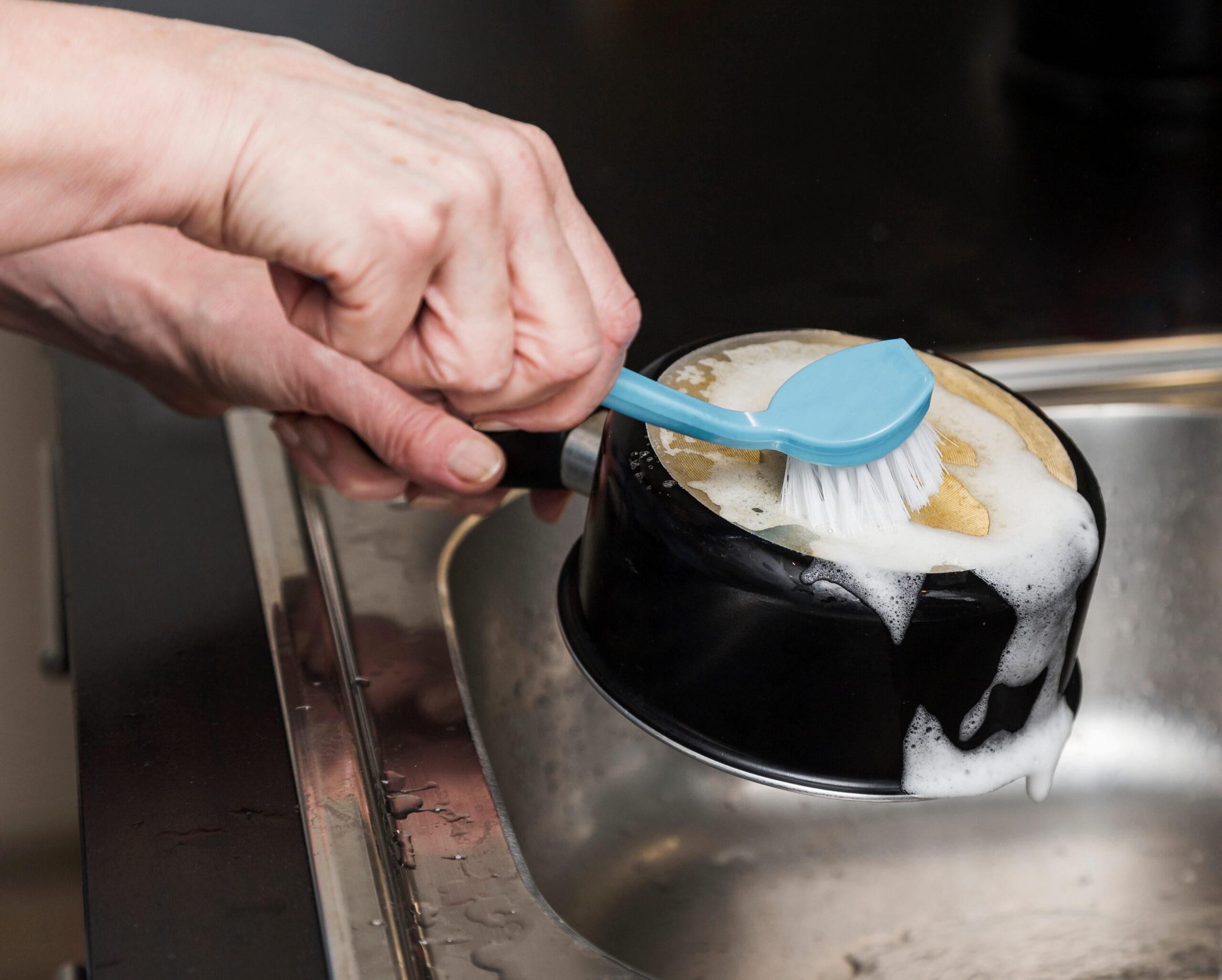
Proper cleaning and seasoning are essential to maintain the performance and durability of cast iron cookware. With the right care routine, cast iron can remain reliable for many years.
Cleaning Cast Iron
In most cases, cast iron does not need heavy washing. A simple rinse and wipe are usually sufficient.
Basic Cleaning Method
- Rinse the pan with warm water after use.
- Wipe away food particles using a cloth, sponge, or brush.
- Dry the cookware thoroughly, preferably by placing it briefly on the stove.
- Apply a thin layer of oil across the surface to protect it from moisture.
Removing Strong Odors
If the cookware retains odors from foods like fish or beef:
- Sprinkle salt into the pan and scrub gently.
- Alternatively, wash with mild soap if necessary.
- Dry the cookware completely and apply oil afterward.
Deep Cleaning (When Required)
For heavy residue, rust, or buildup:
- Use steel wool with mild soap to clean the surface.
- Be aware that steel wool may remove the existing seasoning layer.
- If seasoning is affected, it must be restored through re-seasoning.
A practical way to rebuild the surface quickly is to cook foods that use oil, such as shallow or deep frying, several times.
Important Care Tips
- Always apply oil after washing to prevent rust.
- Do not leave the cookware wet.
- Avoid storing cast iron in damp environments.
How to Season Cast Iron
Seasoning creates a protective layer that gives cast iron its natural non-stick surface.
1. Clean the Cookware
Begin by washing the pan with warm water and mild soap. Use a sponge or brush to remove any food residue or rust. Rinse thoroughly and dry completely with a clean towel.
2. Preheat the Oven
Preheat your oven to 350–400°F (175–200°C). Adjust the oven racks so the cookware can fit comfortably inside.
3. Apply a Thin Layer of Oil
Using a paper towel, spread a thin layer of cooking oil or fat across the entire surface of the cookware, including the exterior and handle.
Common oils used for seasoning include:
- Vegetable oil
- Flaxseed oil
- Canola oil
- Shortening
Make sure the oil is evenly spread without pooling or dripping.
4. Bake the Cookware
Place the oiled cookware upside down on the middle oven rack. To catch excess oil, place aluminum foil on the rack below.
Bake the cookware for 1 to 2 hours, allowing the oil to bond with the metal and create a durable coating.
5. Cool and Repeat
Allow the cookware to cool inside the oven before removing it. For a stronger non-stick surface, the seasoning process can be repeated several times.
6. Maintain Regularly
After each use:
- Clean the cookware with hot water.
- Avoid frequent use of soap as it can weaken the seasoning.
- Dry the pan completely.
- Apply a thin layer of oil before storing.
Final Note
With proper cleaning and seasoning, cast iron cookware develops a durable cooking surface that improves with time. Consistent care ensures better cooking performance and extends the lifespan of the cookware for many years.