

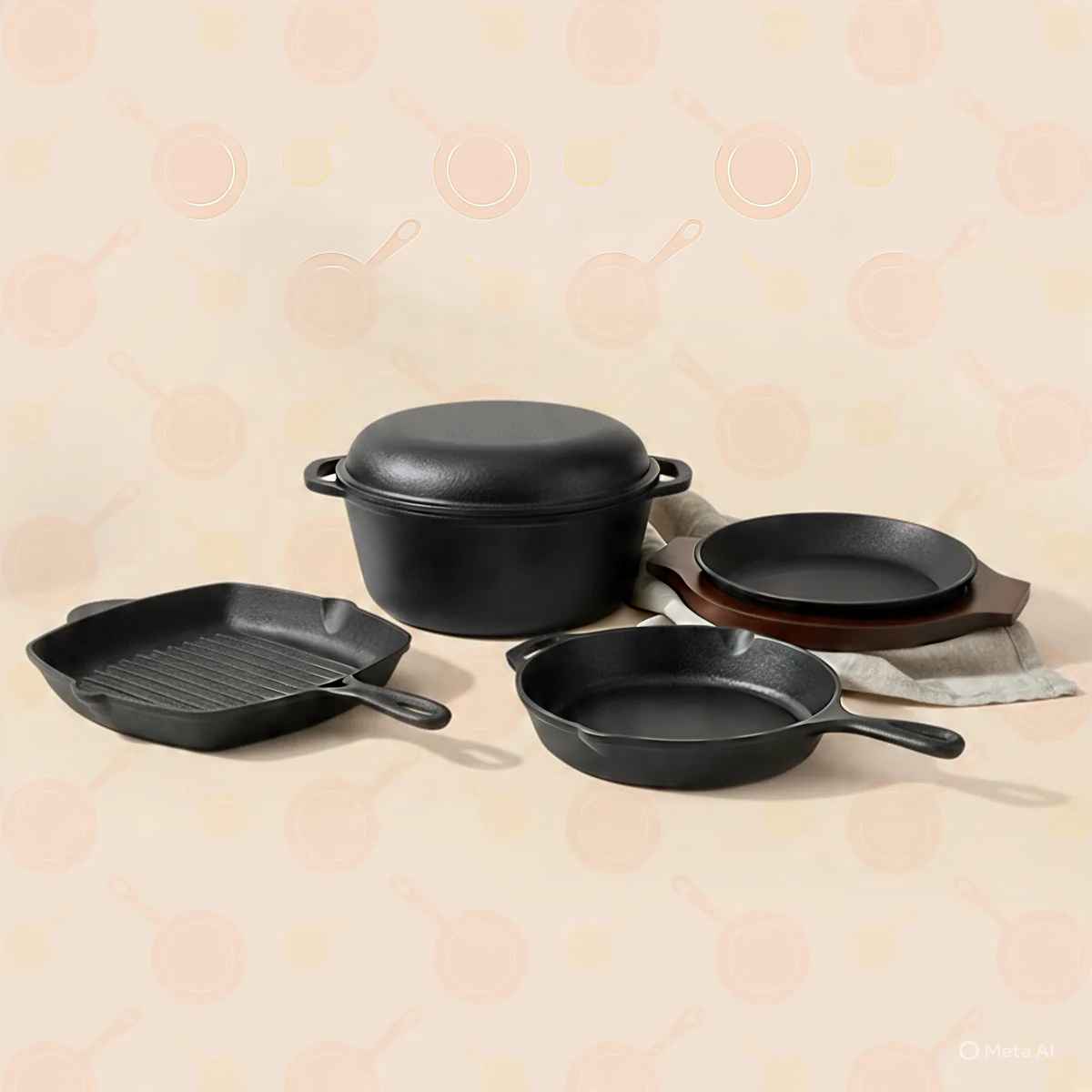
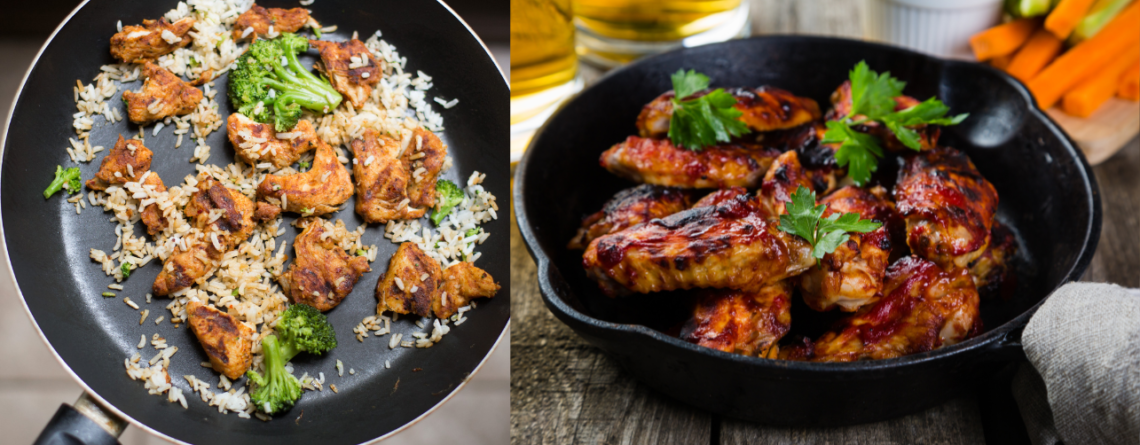
Standing in front of the hob deciding what to cook dinner in comes down to one question most UK cooks face eventually: cast iron vs non-stick? Both have a firm place in British kitchens, but they behave very differently, suit different cooking styles, and come with different long-term costs. This guide breaks down the real differences — heat performance, health considerations, maintenance, and hob compatibility — so you can choose the right pan for the way you actually cook.
The Quick Answer
If you want a pan that lasts decades, sears steak properly, and goes from hob to oven, cast iron is the stronger long-term choice. If you want a lightweight pan that’s ready to use instantly with minimal care — ideal for eggs, pancakes, and delicate fish — non-stick is more convenient day to day. Many well-equipped UK kitchens use both, each for what it does best.
Cast Iron vs Non-Stick: Full Comparison
| Factor | Cast Iron | Non-Stick |
| Heat retention | Excellent — holds and radiates heat long after removed from the hob | Moderate — heats and cools quickly |
| Heat distribution | Very even across the whole surface | Even, but on lighter/thinner pans can develop hot spots |
| Best for | Searing, browning, slow braises, hob-to-oven dishes | Eggs, pancakes, fish, delicate sauces, low-fat cooking |
| Hob compatibility | Gas, electric, induction, oven, grill, campfire | Gas, electric, induction (check base) — not oven-safe above stated limits |
| Maintenance | Hand wash, dry, oil lightly; seasoning improves with use | Wash gently, avoid metal utensils and high heat |
| Typical lifespan | Decades, often generations, with care | Roughly 2–5 years before the coating wears down |
| Weight | Heavy | Lightweight |
| Non-stick surface | Develops naturally through seasoning (bare cast iron) or is enamelled | Built in via PTFE, ceramic, or other coating from day one |
| Health considerations | No synthetic coating; can add small amounts of dietary iron to food | Modern PTFE coatings are considered safe under normal use but degrade if overheated or scratched |
| Upfront cost | Higher | Lower |
| Long-term value | Very high — rarely needs replacing | Lower — coating wears out and the pan needs replacing |
Cast Iron: The Case For It
Unmatched Heat Retention
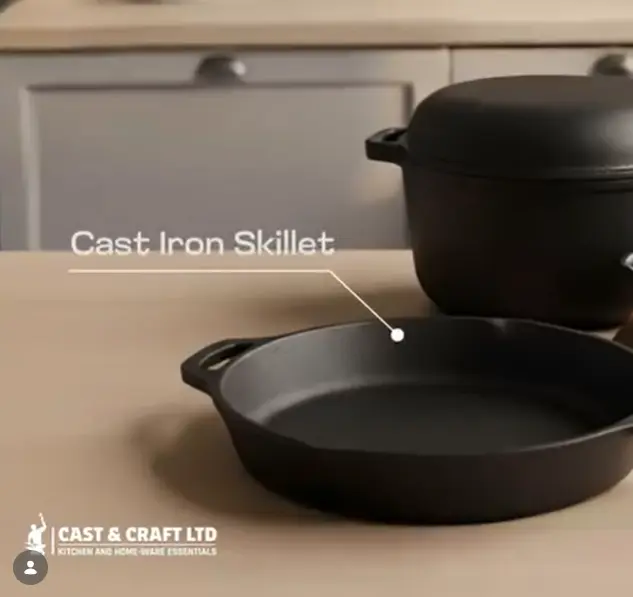
Cast iron holds heat far longer than non-stick, giving a more consistent sear on steaks, burgers, and vegetables. It’s also why cast iron skillets are often used as serving dishes — the pan stays warm at the table long after it leaves the hob.
Goes Anywhere: Hob, Oven, and Beyond
Cast iron cookware works on gas, electric, induction, and ceramic hobs, transfers straight into the oven, and even performs over an open flame. For UK kitchens with an Aga, Rangemaster, or Rayburn, cast iron is one of the few materials built for that kind of sustained, high-heat cooking.
Built to Last Generations
A well-seasoned cast iron pan can genuinely outlive its owner. It doesn’t wear out the way a coated pan does — it improves with age and use, developing a smoother, more effective natural non-stick surface over time. See our full guide to cleaning and seasoning cast iron for the basics.
No Synthetic Coating
Bare cast iron relies on seasoning — a layer of polymerised oil — rather than a manufactured non-stick coating. There’s nothing to scratch off or wear away into your food.
Non-Stick: The Case For It
Ready to Use Instantly
Non-stick pans need no seasoning and work well the moment you take them out of the box — useful for quick weekday cooking.
Ideal for Delicate, Low-Fat Cooking
Eggs, pancakes, crêpes, and delicate fish fillets release effortlessly from a good non-stick surface, and the coating means you can cook with less oil or butter — a genuine advantage for lower-fat cooking.
Lightweight and Easy to Handle
Non-stick pans are significantly lighter than cast iron, which matters for anyone who finds a full cast iron Dutch oven or skillet awkward to lift and manoeuvre one-handed.
What About Safety?
Modern PTFE-coated non-stick cookware sold in the UK and EU has been PFOA-free since 2013 and is considered safe for normal home cooking, provided pans aren’t overheated (typically above 260°C) or used once the coating is significantly scratched or worn — at which point it’s best to retire the pan rather than continue cooking with it.<sup>[1]</sup>
Which Should You Choose?
Choose cast iron if you:
- Want cookware that lasts decades rather than years
- Cook a lot of steaks, roasts, braises, or oven-finished dishes
- Are happy with a short seasoning and care routine
- Want a pan that works on every UK hob type, including induction, plus the oven and grill
Choose non-stick if you:
- Cook a lot of eggs, pancakes, and delicate fish
- Want the lowest-maintenance option
- Prefer a lighter pan
- Are cooking on a tighter budget upfront and don’t mind replacing pans every few years
Or do what most well-equipped kitchens do: keep a cast iron skillet or Dutch oven for searing, roasting, and slow cooking, and a non-stick pan for eggs and delicate foods. The two aren’t really competitors — they’re complementary tools.
Caring for Whichever You Choose
- Cast iron: hand wash, dry immediately, apply a thin layer of oil, and re-season occasionally if food starts sticking.
- Non-stick: use wooden, silicone, or plastic utensils only, avoid extreme heat, and hand wash rather than putting it through the dishwasher to protect the coating.
- Retiring old pans: when a non-stick pan’s coating is scratched or a cast iron pan is beyond repair, most UK councils accept metal pots and pans for recycling at a Household Waste Recycling Centre rather than in kerbside recycling bins — check with your local council for collection points.<sup>[2]</sup>
Summary
There’s no single “better” pan — cast iron and non-stick solve different problems. Cast iron wins on durability, heat retention, and versatility across hob types and the oven; non-stick wins on convenience and ease for delicate, low-fat cooking. The right answer for your kitchen depends on how you cook, not which material sounds more impressive.
Explore the Cast and Craft cast iron cookware range — skillets, Dutch ovens, casseroles, griddles, and grill pans — with free UK delivery over £70.
FAQs
Is cast iron better than non-stick?
Neither is universally “better” — cast iron offers superior heat retention, durability, and oven compatibility, while non-stick offers lighter weight and easier release for delicate foods like eggs and pancakes. The right choice depends on your cooking style.
Is non-stick cookware safe to use?
Modern non-stick cookware sold in the UK is PFOA-free and considered safe for normal home cooking, as long as pans aren’t heated above around 260°C or used once the coating is heavily scratched or worn.
Can you use cast iron for eggs and pancakes?
Yes, once a cast iron pan is well-seasoned it releases eggs and pancakes reasonably well, though a dedicated non-stick pan will still generally outperform it for very delicate items.
Does cast iron work on induction hobs?
Yes. Cast iron is magnetic, which makes it naturally compatible with induction hobs, alongside gas, electric, and ceramic hobs.
How long does non-stick cookware last compared to cast iron?
Non-stick cookware typically lasts around 2–5 years before the coating wears down, while cast iron cookware, if properly cared for, can last for decades or even generations.
Do I need to season a non-stick pan?
No. Non-stick pans have a built-in coating and don’t require seasoning, unlike bare cast iron, which needs an initial and ongoing seasoning routine to build its natural non-stick surface.
Leave a Reply